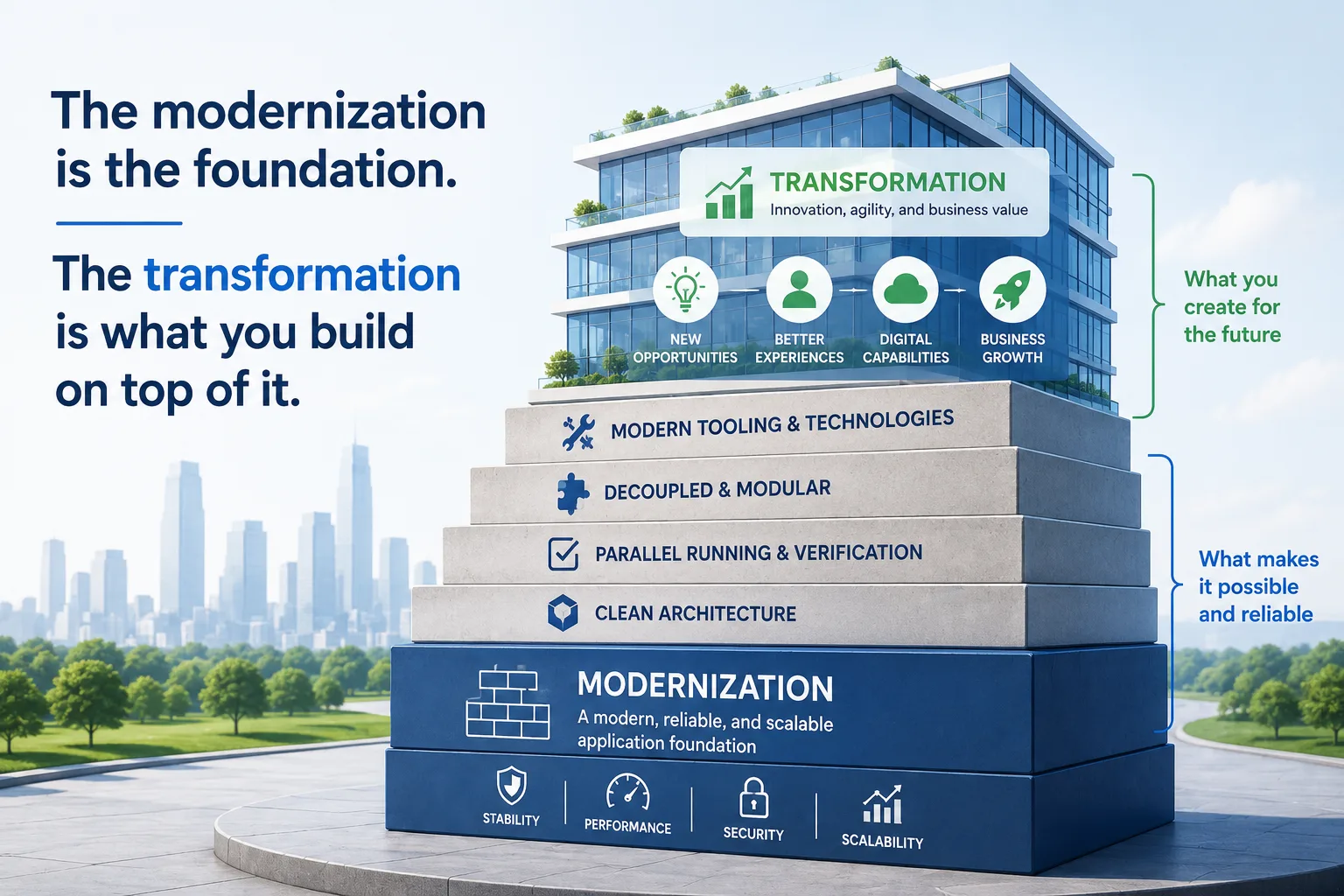
A successfully executed PowerBuilder modernization is not a destination. It is the moment everything that was structurally impossible becomes possible.
The API-first backend now serves multiple surfaces simultaneously — a web application, a mobile app, a partner integration, a data pipeline. With the original PowerBuilder runtime, each of those would have required a separate architecture. Now they share one.
Performance becomes optimizable. The original application likely retrieved entire DataWindow result sets to the client before filtering at the display layer. The modernized system pushes filtering and aggregation into the database or a Redis caching layer. Expensive computed queries run once and are cached. Reports that took minutes take seconds.
Security posture transforms. The original system ran on a corporate network with implicit trust. The modernized system enforces OAuth 2.0 authentication at every API boundary, supports multi-factor authentication, generates a full audit trail at the service layer, and integrates with enterprise SIEM tooling. This is not a patch — it is a structural improvement.
Recruiting becomes normal. Any competent .NET or React developer can maintain and extend the system. You are no longer searching for a specialist who remembers what PowerScript looks like. The talent pool goes from a handful of senior developers to every software engineer in your market.
None of this is an add-on. It is what you get when the business logic — the actual asset — runs in a modern runtime rather than a proprietary one.
The modernization is the foundation. The transformation is what you build on top of it.
You can find relevant information in the specific section: https://enable-dev.com/modernization
Follow us on LinkedIn.